Range is context
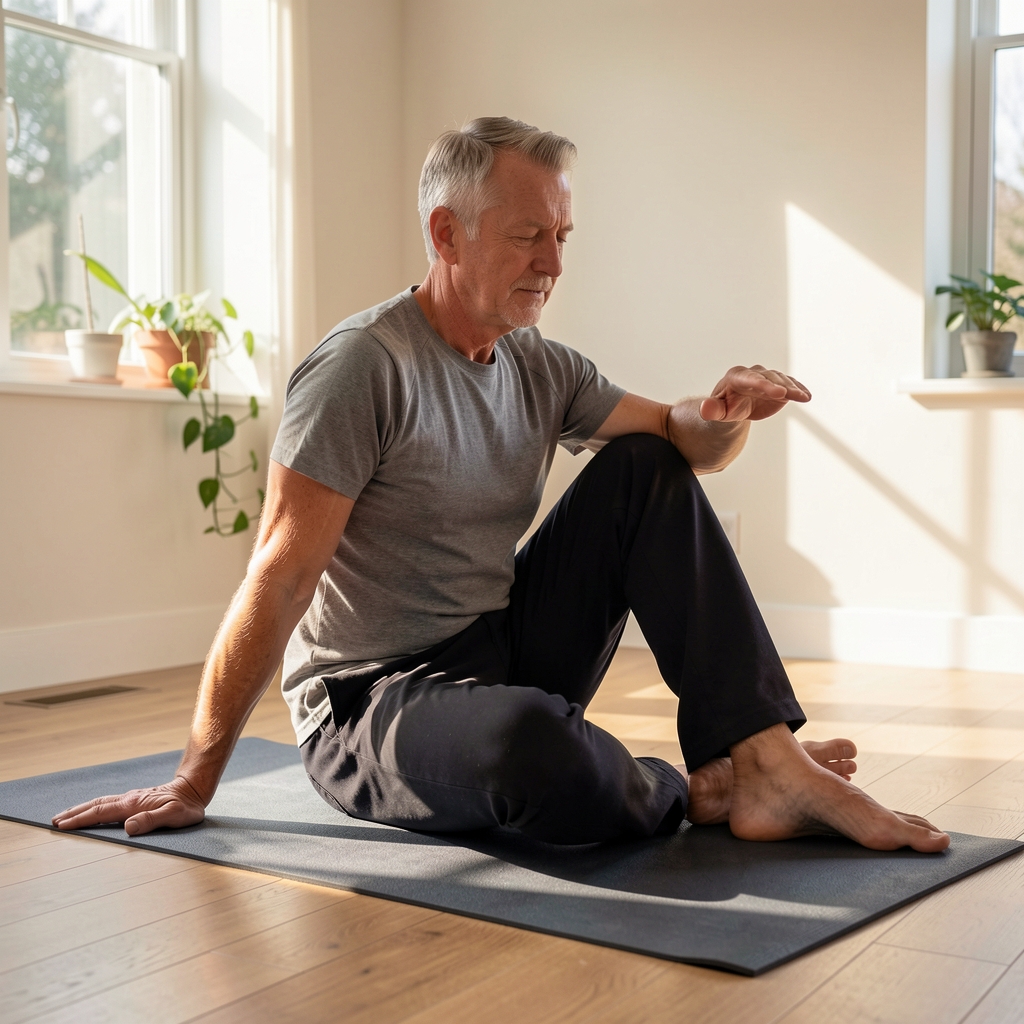
Movement range changes with temperature, time of day, previous activity and attention. A stiff feeling after sitting is not a complete description of a person's capability. Gentle repeated practice can help someone become more familiar with a position, while strength within that position contributes to confidence.
Use a comfortable starting range and avoid turning a mobility session into a contest. Small, regular exposures tend to be easier to maintain than rare, intense stretching.
Daily movement snacks
A few minutes between meetings can include walking, shoulder circles, controlled hinges or a calm squat pattern. These moments do not need elaborate equipment. They are opportunities to change position and reconnect with movement during a sedentary day.
Warm-up and training
A warm-up can raise temperature, rehearse the session's patterns and identify how the body feels that day. It does not need to be identical each time. Specific preparation is often more useful than a long catalogue of unrelated stretches.
Strength through range
Mobility is not only passive. Controlled resistance in a comfortable range can build familiarity and ownership. A slower repetition, a pause or a supported variation may be appropriate when learning a movement. If a concern persists or changes, speak to a GP or qualified healthcare professional.
A realistic habit
Attach a short sequence to a dependable daily cue, such as after a walk or before a shower. Keep it brief enough to repeat. Over several weeks, review comfort, control and confidence rather than looking for a dramatic change.
Key takeaways
- Flexibility and mobility describe overlapping but different ideas.
- Comfortable, repeated practice can be more useful than occasional intensity.
- Warm-ups prepare both attention and movement for a session.
- Personal concerns require personal advice beyond editorial content.